

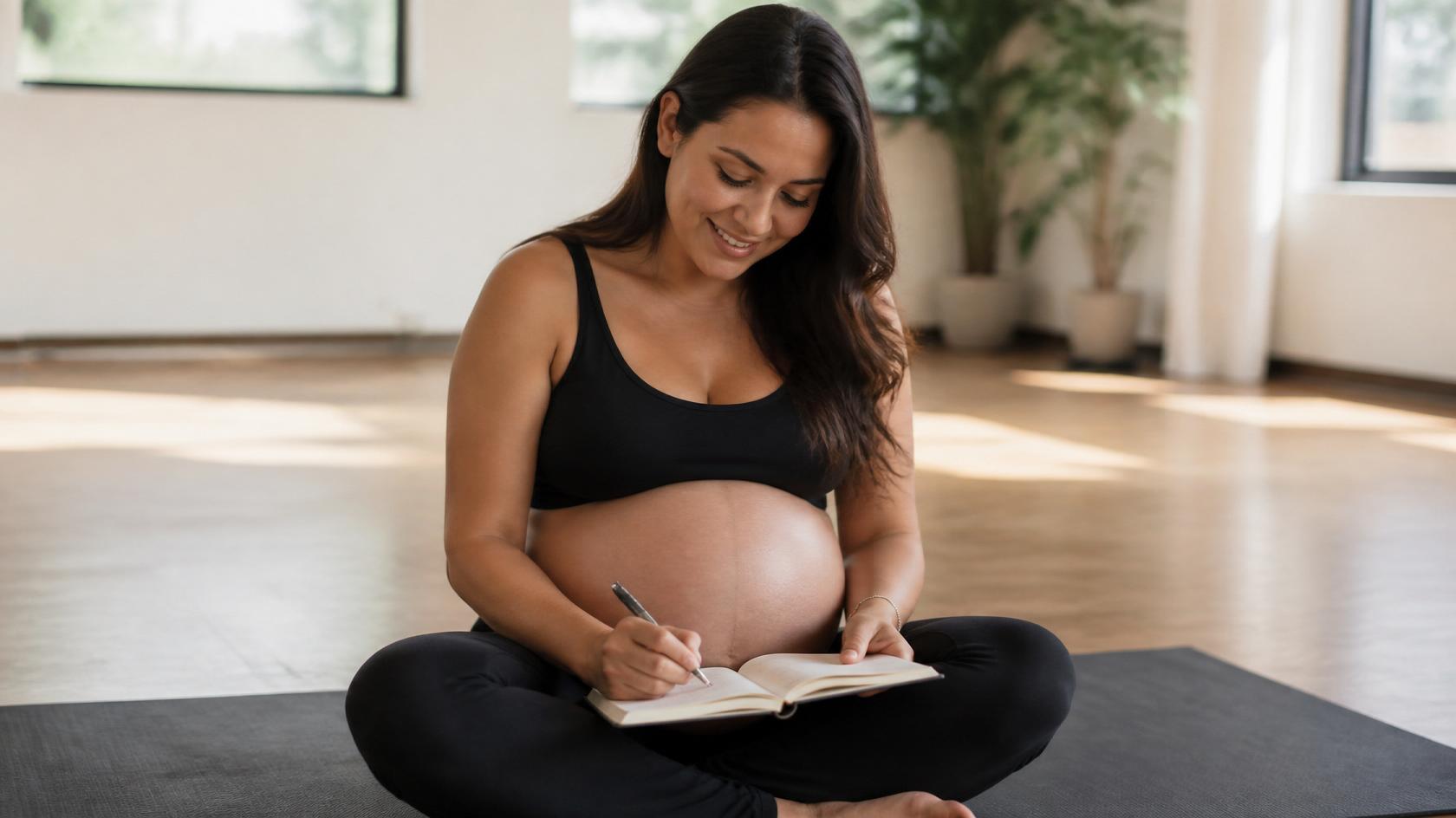
In almost every prenatal yoga session, the instructor takes a break from the cue cards and asks the room a question unrelated to breathing and alignment: “Are you writing this down?”
Inevitably, most of the participants keep their hands in their laps.
This gap, between the expecting moms’ lived experience on the mat and what they will remember later, is the reason yoga instructors began suggesting the best pregnancy journals to their students as a class essential and not a nice-to-have.
This trend is spreading, quietly but almost everywhere, from studio to studio.
Earlier this year, I attended a Tuesday evening class and sat in the last row next to a participant who was seven months pregnant and, according to her, was “forgetting everything the second I stand up.”
The instructor, Priya, who has ten years of experience teaching prenatal yoga, told the class that journaling was the homework she assigned most often. Not because it is a fad, but because it works.
The Body Remembers, But the Mind Forgets
Yoga instructors prompt a heightened awareness of the body, like the gradual opening of the hips from week 20 to week 30, or the shift in breath when the diaphragm becomes congested.
But the body is a poor storyteller. It does not hold onto details the way a written record does. A journal helps by capturing the fleeting physical shifts that happen during class and the emotional subtleties those classes tend to bring up.
Many instructors have noticed something interesting: students seem to process during class, but they retain it better when they write it down afterward.
Stretching and breathing may open a door, but writing is what actually walks through it. That observation, repeated by teacher after teacher, is what makes journaling feel less like a suggestion and more like a logical next step after the mat.
Breath, Movement, and the Page Work Together
Prenatal yoga tends to prioritize breath over movement, and there is a reason for that. Breath is difficult to quantify. For a first-time mom, logging numbers in a fitness tracker does not always carry much meaning.
But words are different. One mom from that Tuesday class told me she started writing a single line after every session. She began describing how her breath felt, whether it was tight or open, fast or slow.
She said those few sentences helped her understand her body in a way no metric ever could.
This is why guided journals tend to outperform blank ones. Teachers consistently report that students using structured, weekly prompt journals develop the habit far more reliably than those handed a blank notebook and told to write.
Blank pages, it turns out, are intimidating even to motivated people. When the topic of journaling comes up in class, most instructors point students toward structured resources without hesitation.
Why the Recommendation Sticks
What makes this interesting is that yoga instructors are not typically the recommending type. Most are careful about anything that resembles an endorsement.
So when an instructor who rarely pushes products starts consistently bringing up a pregnancy journal by name, expecting mothers tend to pay attention.
There are practical reasons the pairing works. Many pregnancy journals include prompts that correspond directly with the physical and emotional changes that prenatal yoga already addresses.
A prompt asking, “What surprised your body this week?” lands differently after a class spent noticing subtle shifts in balance and breath. Journaling within that context does not feel like extra work. It feels like a continuation of the practice.
Teachers also understand that pregnancy is unpredictable. There are calm and capable weeks, and there are anxious and exhausting ones.
A journal gives students permission to document both. It holds space for the difficult days alongside the good ones. That is something yoga teachers genuinely value, and it is part of why they keep bringing it up.
Tiny Rituals of Great Importance
The journaling instructors encouraged, never demanded, hours of writing. Five to ten minutes after class, just enough to capture a physical sensation, a passing thought, or a single honest line about the day, was enough.
Some instructors found that writing a brief intention before class even started added something valuable to the session itself.
For students exploring weight loss yoga for ways to get back in shape after pregnancy or simply trying to stay grounded through forty weeks of change, this kind of journaling offered more than they expected.
Done consistently, it became a document of an entire chapter of life. More than a trend or a marketing angle, that is what keeps teachers talking about it.
They see what happens when students combine the mat and the page, and they would rather their students remember the process than lose it entirely.